Small Business
How Many Custom Shirts Should a Small Business Order?
The Rise & Tide Team · October 15, 2026 · 6 min read
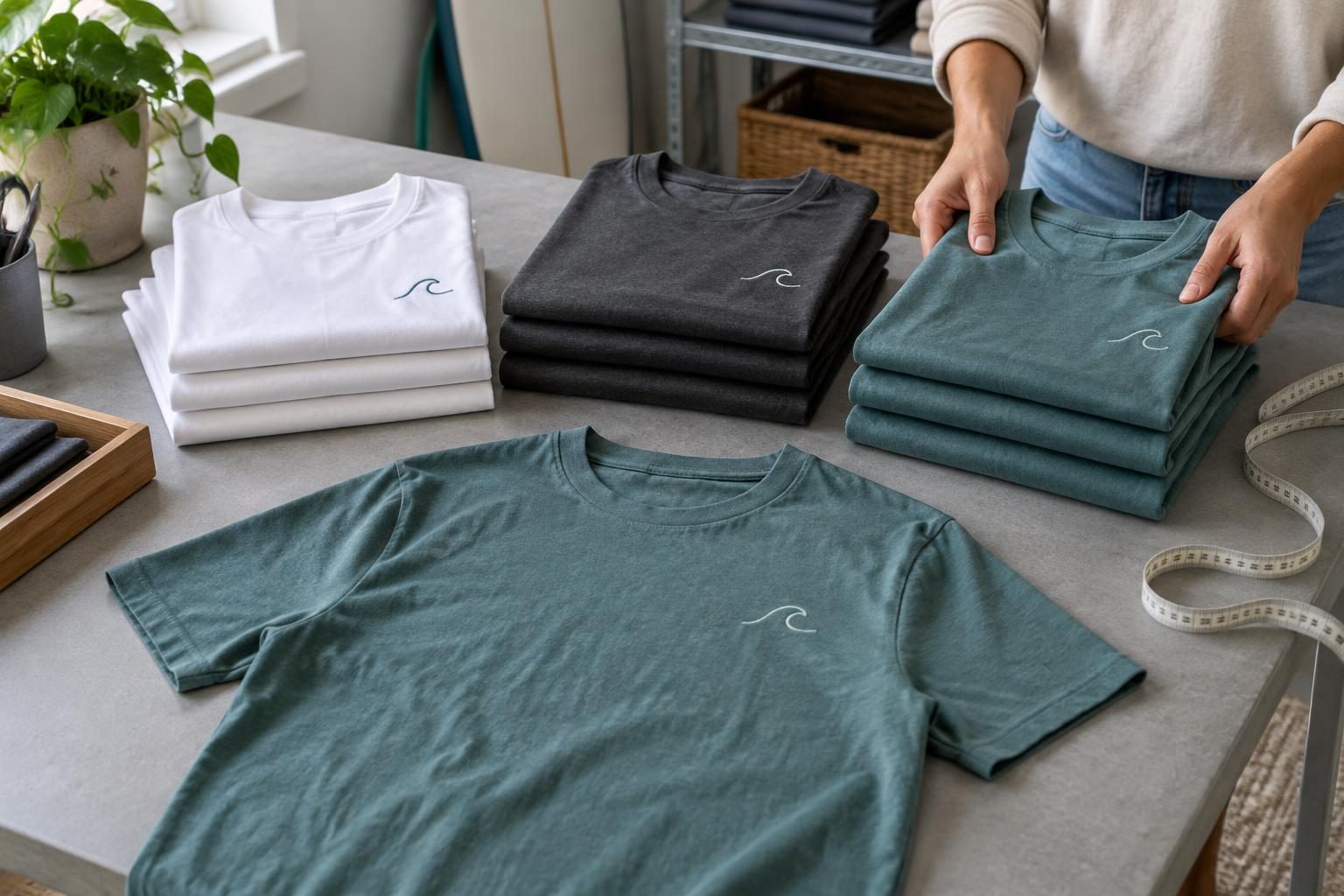
Your first custom shirt order should make work easier, not leave you managing a closet full of guesses. Whether you run a coffee shop, a landscaping crew, or a neighborhood studio, the right quantity starts with how the shirts will be worn. A lower unit price is useful only if the extra pieces actually have a job.
Start with wearers, laundry, and a small buffer
Use this framework: number of wearers × shirts per person + practical spares. For uniforms, two shirts per person can work for occasional shifts and frequent laundry. Three is a reasonable starting point for a regular rotation. Four or five may make more sense for full-time staff washing weekly, especially in sweaty or messy work. Match the allowance to the longest gap between washes; five shirts do not cover six daily changes.
For eight employees receiving three shirts each, the working allocation is 8 × 3 = 24 shirts. Add three to five spares and your first order becomes 27–29 shirts. That buffer can cover a damaged shirt, an unexpected shift, or an incoming hire. It is an example, not a universal spare percentage: a stable office team and a growing outdoor crew need different reserves.
Write the allocation down by person and size before adding spares. Choose spare sizes from your actual team mix and any confirmed incoming staff, rather than buying one of every size. Revisit the count if some employees work only one shift a week; identical allowances are not always practical.
Collect sizes instead of guessing them
Ask each wearer to choose a size using the exact garment’s size chart. A medium in one shirt is not necessarily a medium in another. Note whether measurements describe the body or the garment, and let people compare garment measurements with a shirt they already like. Offer the available size range rather than assuming everyone fits a standard set.
A try-on sample is especially helpful when changing brands, cuts, or fabric. Confirm the size list privately before production. Do not treat spares as a guaranteed exchange service: personalized or decorated garments may not be returnable for a different size. Ask about the supplier’s exchange policy before ordering, including how misprints or defective items are handled.
Separate everyday uniforms from event shirts
Uniforms need a repeatable rotation; an event tee usually needs one piece per confirmed wearer. Count staff, volunteers, and any recipients separately, then add a modest contingency based on how reliable registrations are. If shirts are being sold or given away, staff headcount is not your demand forecast. Use preorders, confirmed requests, or results from a comparable event instead.
Seasonal staffing deserves its own line in the plan. Include confirmed hires who will need shirts before you can reorder, but avoid stocking for every possible hire. An undated logo design can serve future recruits; a tee printed with a specific event date has a much shorter useful life.
Compare quotes without chasing excess inventory
Ask for your practical quantity and the next relevant bulk unit-price break. Compare the total spend, not just the price per shirt, and check which garments qualify. Setup, extra print locations, size surcharges, shipping, and taxes can change the comparison. A discount on merchandise does not necessarily apply to every charge on the order.
Print method also shapes the economics. Screen printing often rewards larger runs of the same simple design because setup is spread across more shirts. DTF can suit smaller multicolor orders and suitable mixed fabrics; DTG can be a strong fit for detailed graphics on cotton-rich garments. None supplies a universal minimum or break-even quantity. Request a quote for your actual artwork and shirt, not an abstract printing method.
Choose a shirt worth reordering
Consider fit, fabric weight, movement, climate, and care requirements. Soft cotton may suit a retail team; a compatible performance blend may serve an outdoor crew better. Order a blank sample where possible, and ask whether a decorated sample is available and what it costs. A digital proof checks artwork and placement, not fit or print feel. Wash-test the sample according to its care label before committing.
Keep the approved artwork, garment brand and model, color, size breakdown, and decoration details together. Ask about stock continuity, reorder lead times, and whether a small repeat run changes the unit cost. Track actual wear, replacements, and leftover sizes after the first month. Those observations make the next order more accurate than a bigger speculative first run.
Before you approve: a short checklist
- Confirm wearers, shifts, and the laundry-based allowance.
- Collect sizes against the selected garment’s chart or samples.
- Allocate spares and confirmed seasonal hires deliberately.
- Compare complete quotes and approve the artwork proof.
- Check delivery timing, exchange terms, and reorder details.
Frequently asked questions
Is two shirts per employee enough?
Sometimes. Two can cover occasional wear with dependable washing between shifts. For daily uniforms, calculate the rotation around laundry frequency and whether work requires an extra change. Start there rather than treating two as a blanket recommendation.
Should I order more just to reach a discount?
Only when the extra shirts have a credible use and the total cost fits your budget. Compare the additional spend with the likely need before the design, staffing, or season changes. Unused inventory is not a saving.
Can I reorder exactly the same shirts later?
Often, but availability and dye lots can change. Save the specification and check stock and decoration details before repeating an order. Build in lead time rather than waiting until the last spare is gone.
Rise & Tide can help turn your wearer count, size list, and working conditions into a practical first order. Bring those details and your deadline; the goal is enough good shirts in the right sizes, not the largest possible box.
Ready to put the right shirts to work? Explore business packages for a starting point, or request a custom quote for your design and quantity.
Every Brand Has a Story. Every Shirt Tells One.