Marketing
5 Ways Branded Merchandise Can Market Your Business
The Rise & Tide Team · October 15, 2026 · 7 min read
Branded merchandise earns its place when someone has a reason to keep it, wear it, or reach for it tomorrow. A logo on an object is not a marketing strategy by itself. The useful question is: where can this item make a good experience with your business easier to remember?
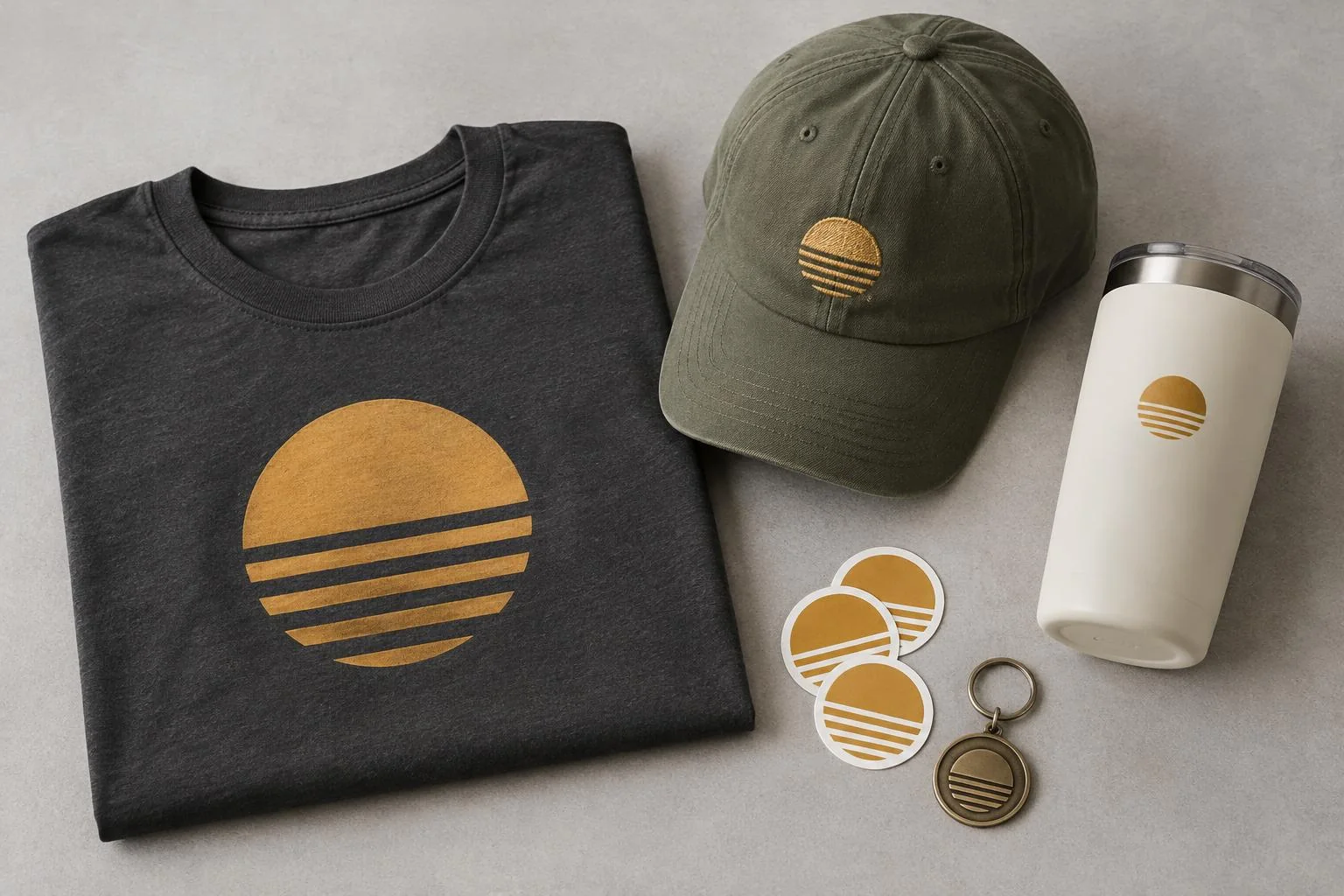
For a small business, the answer often starts close to home: your crew, regular customers, and neighborhood events. Shirts, embroidered hats, tumblers, stickers, and keychains can play different roles. Choose the role first, then the product. These five approaches help you make that decision without treating a box of merchandise as a shortcut to growth.
1. Give employee apparel a job beyond the logo
Staff apparel creates recurring local visibility because your team is already out doing the work. A landscaping crew wearing coordinated shirts can become familiar along a regular route. For a contractor, a recognizable chest mark helps a homeowner identify the person arriving at the door. At a coffee shop, consistent apparel makes it easier to spot someone who can help.
Start with comfort and the working day. Ask employees about fit, movement, weather, and laundry before choosing a shirt or embroidered hat. Use a clear logo rather than filling every surface with contact details. Keep replacement specifications on file so new hires look like part of the same team. Apparel supports professionalism; punctuality, careful work, and courteous service give that visibility meaning. Ordinary branded clothing is not a substitute for required safety equipment.
2. Make event giveaways useful, not just plentiful
At a neighborhood fair, the aim is not to empty the largest possible carton. It is to start relevant conversations and leave people with something they want. A café’s tasteful sticker might suit regulars decorating a laptop or bottle. A neighborhood shop could offer a practical keychain that fits its customers’ routines. A tumbler might belong in a smaller, more intentional giveaway rather than a free-for-all.
Choose one audience and one next step: visiting the shop, exploring a service, or joining an explicitly opt-in mailing list. Put the invitation on a small accompanying card if it would crowd the merchandise. Check event rules and avoid requiring personal information unexpectedly. Record how many items you distribute and how many useful conversations follow. A giveaway taken by a visitor is an interaction, not proof of a future sale.
3. Turn thank-you gifts into genuine appreciation
A thoughtful gift can reinforce a relationship after good work. A landscaper might thank a long-standing customer with a useful tumbler and a personal note. A coffee shop could offer regulars a well-designed sticker or shirt at a meaningful milestone. The point is to acknowledge the relationship, not to make the recipient carry an oversized advertisement.
Define a manageable occasion and budget before promising gifts broadly. Ask what customers would use, and allow a simple alternative where practical. Keep the branding restrained and the thank-you specific. Never make a gift conditional on a positive review, and check any applicable recipient or platform policies. If you operate a loyalty program, explain its terms clearly and track participation separately from gift distribution. Appreciation works best when the service already deserves it.
4. Create retail merchandise with its own appeal
People buy merchandise they like, not merely logos they recognize. A coffee shop shirt can express the character of the place through a wearable graphic. A neighborhood retailer might build a small collection around a distinctive local motif, with a subtle business mark. An embroidered hat can appeal to customers who would never choose a large printed shirt.
Treat this as a product decision. Ask regulars which design they would actually wear, compare sample options, and check garment feel and fit. Plan a modest first run and a realistic size mix rather than spreading money across too many colors and styles. Preorders may help assess demand if delivery expectations are clear. Include decoration and other applicable costs when setting your own selling price. Track sales and leftovers by size; compliments are encouraging, but they are not purchase commitments.
5. Build cohesive onboarding and referral kits
A kit should answer a real need, not simply bundle leftovers. For a new contractor employee, shirts in the right size, a hat, and clear contact information can make the first day feel organized. For a new landscaping customer, a welcome note and a useful item can accompany straightforward guidance about scheduling and communication. Match the kit to the relationship instead of giving everyone the same package.
Referral kits need an easy handoff. A local shop might give an enthusiastic customer a small sticker and a card with a shareable link. Keep any referral terms transparent; do not imply a reward that has not been defined. Use the same logo and visual language across the pieces, but let instructions live on the card. Cohesion helps recognition while useful information helps the recipient act.
Prioritize the budget and measure what happens
Fund the most dependable use first. If staff need work shirts, start there before experimenting with public giveaways. For a customer-facing shop, test one merchandise item with a clear audience. Compare complete quotes, sample options, and storage needs. A lower unit cost is not a saving if the extra inventory sits untouched.
Give each experiment one simple measure. An event-specific QR link can record visits to a relevant page; test it on a phone before printing, and avoid putting an untested tiny code on fabric. A unique source code can identify inquiries without necessarily offering a discount. Ask new customers how they heard about you and record answers consistently. Compare distribution, inquiries, sales where attributable, and leftovers. These signals help you decide what to repeat, but none isolates merchandise as the sole cause of growth.
A short action checklist
- Choose one audience, one purpose, and a spending limit.
- Select something useful; collect apparel sizes and review samples where practical.
- Check the design, proof, complete costs, and realistic first-run quantity.
- Assign distribution and tracking to someone, then review results before reordering.
Plan the details with these related Journal guides:
Rise & Tide can help you connect the audience, design, and product choice before you commit. Bring a clear purpose and an honest budget, and choose pieces that belong in the story your business is already telling.
Ready to put the right shirts to work? Explore business packages for a starting point, or request a custom quote for your design and quantity.
Every Brand Has a Story. Every Shirt Tells One.